When people decide they’re ready to invest in property, the first question is often: “Where should I buy?”
It’s understandable. Suburbs, property prices and market forecasts are tangible. You can search listings, compare locations and start imagining what an investment might look like.
But we believe there’s a more important question to answer first: “What does this investment need to achieve?”
Because buying an investment property and building a property portfolio are two very different things. A property is an asset. A portfolio is a long-term strategy, where every investment has a purpose and every decision should help move you closer to a broader financial goal.
That’s why at Prospera, we start with the strategy — and only then do we start looking for the property.
Before choosing a property, understand the goal

There is no single definition of a good investment property.
For one investor, the priority might be long-term capital growth and building equity.
For another, cash flow may be particularly important.
Someone looking to build a multi-property portfolio may need their first purchase to put them in the strongest possible position to invest again. And another homeowner may ultimately be investing because they want to build wealth that can help them reduce their personal mortgage sooner.
The property that suits each of those investors may look very different. This is why starting with a suburb, development or available property can put the process backwards.
First, understand the outcome. Then determine what kind of investment can help you work towards it.
What is a Foundation Strategy?
At Prospera, this planning happens through our Foundation Strategy.
Before recommending a property, we take the time to understand where you are today and where you want to go. That includes looking at your current financial position, existing property and debt, available equity, goals and investment timeframe.
For homeowners, that can also mean understanding the role their existing home equity could play. Having equity available doesn’t automatically mean it should be used, and available equity isn’t the same as borrowing capacity. The question is whether using some of that equity could support the broader financial outcome you’re working towards.
From there, we can begin mapping an investment pathway.
The objective isn’t simply to answer “What can you afford to buy?” It’s to understand what role property could play in your broader financial future. Borrowing capacity can tell you what may be financially possible. It doesn’t necessarily tell you which investment makes sense for your goals.
Does buying this property today support what you want to do tomorrow?

This is where portfolio sequencing becomes important.
The goal isn’t to accumulate as many properties as possible.
It’s to build a portfolio where each investment has a purpose and supports the decisions that come after it.
There is no “perfect” investment property
This also means letting go of the search for the perfect investment. Every property has strengths and trade-offs.
A property with stronger growth potential may have a different rental yield to one selected with cash flow in mind. A property that suits someone building their first investment may not be appropriate for an investor with an established portfolio.
There isn’t necessarily one property that does everything.
The better question is: Is this the right property for the role it needs to play in my strategy?
That’s why we believe strategy should always come before property selection.

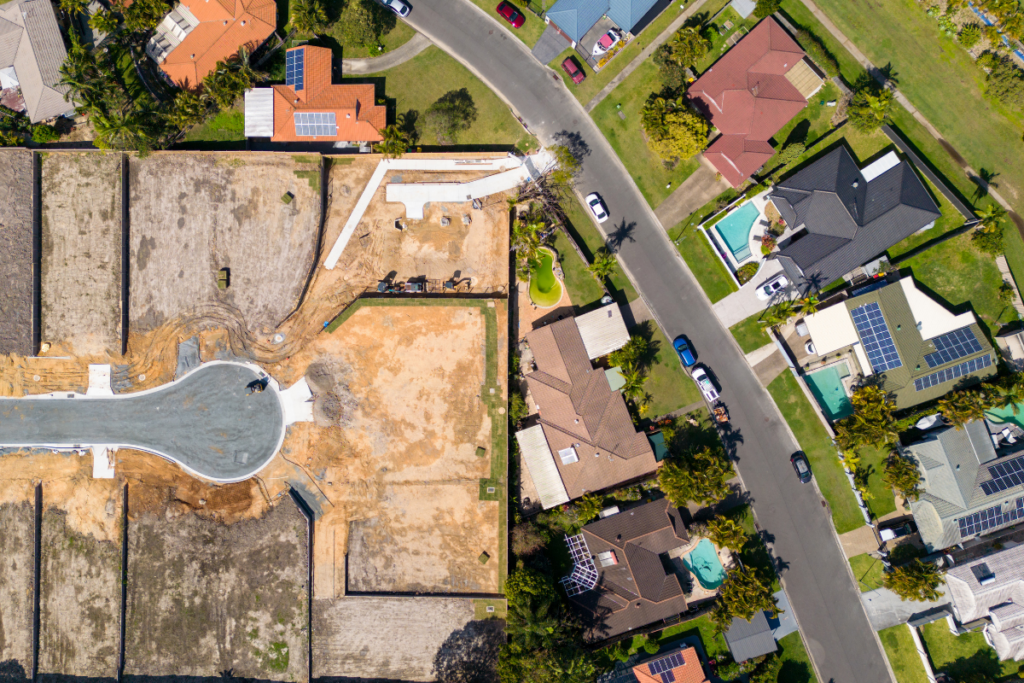
Once you know what you need, where do you look?
This is where market research becomes important.
At Prospera, we don’t start with a location because it’s receiving media attention or because it topped last year’s growth tables.
We look at the underlying factors that can support housing demand over the longer term.
Population growth is one. Housing supply is another.
We also consider employment and economic activity, infrastructure investment and how those factors interact within individual markets.
No single statistic determines whether somewhere is a good place to invest.
It’s the combination of those fundamentals — and what is happening beneath the headline numbers — that gives us a reason to investigate further.

When we step beyond the headlines, the data continues to point towards one of the biggest structural challenges facing the Australian property market.
Australia’s population grew by more than 500,000 people over the past year, driven largely by strong overseas migration. At the same time, the construction industry continues to face significant challenges delivering enough new housing to meet that demand.
This growing imbalance between population growth and housing supply has been consistently identified by both Cotality and Domain as one of the key factors supporting long-term property values and rental conditions across many parts of Australia. Rather than being driven by short-term sentiment, property markets continue to be influenced by a structural shortage of housing, particularly in locations experiencing strong employment growth and population inflows.
For investors, this matters because supply and demand remain the foundation of long-term property performance.
While sentiment may fluctuate from month to month, these structural drivers typically play out over many years.
A good opportunity can still be wrong for you
This is perhaps the most important part of the process. We can identify an area with compelling fundamentals and still determine that it isn’t appropriate for a particular investor.
Because market opportunity is only one side of the equation. Your strategy is the other. A property needs to fit your financial position, timeframe, portfolio and goals.
Property investment becomes much clearer when you change the order of the questions.
Don’t start with: Where should I buy?
Start with: What am I trying to achieve?
Then: What does my next property need to do?
What type of market could support that objective?
Where are those conditions coming together?
And finally: Which property fits the strategy?
At Prospera, that’s why the Foundation Strategy comes first.
Because we’re not trying to find you a property and then build a strategy around it. We build the strategy first. Then we find the opportunity that fits.

This is why property selection is never our starting point.
Every client begins with a strategy. We take the time to understand what they are trying to achieve, whether that’s paying down non-deductible home loan debt, building a portfolio that creates long-term financial freedom or establishing wealth that can support future generations.
Once those goals are clear, we apply our investment framework. We assess the broader economy, analyse state and city-level trends, evaluate suburb fundamentals and then identify opportunities that align with both the market data and the client’s objectives.
Every property should serve a purpose within the broader strategy.
Because long-term wealth is rarely created through one good investment. It is built through a series of well-informed decisions that continue to support one another over time.