If you’ve been following the property market recently, you’ve probably noticed a common theme. Interest rates remain higher than many borrowers would like, affordability continues to dominate the headlines and changing government policies have left some investors questioning whether now is the right time to invest.
It’s understandable that confidence has become more cautious. Property is a long-term commitment, and uncertainty naturally causes people to pause before making significant financial decisions.
But consumer confidence and investment opportunity are not the same thing.
Consumer confidence tells us how Australians feel about the economy today. It doesn’t tell us where the next investment opportunity is likely to emerge. At Prospera, that’s an important distinction because while sentiment influences behaviour in the short term, successful property investing has always been driven by understanding the long-term fundamentals that shape individual markets.
Consumer Confidence Doesn't Predict Property Performance
The ANZ-Roy Morgan Consumer Confidence Index provides a useful snapshot of how Australians are feeling about the economy. Over the past decade, confidence has fallen sharply during events such as COVID-19, periods of high inflation and the Reserve Bank’s interest rate increases, before gradually recovering as economic conditions stabilised.
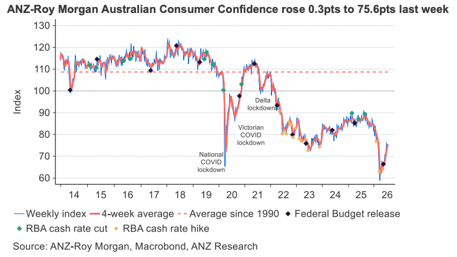
Looking at the graph, one trend becomes clear. Confidence reacts to events that have already occurred. It is an emotional measure rather than a leading investment indicator.
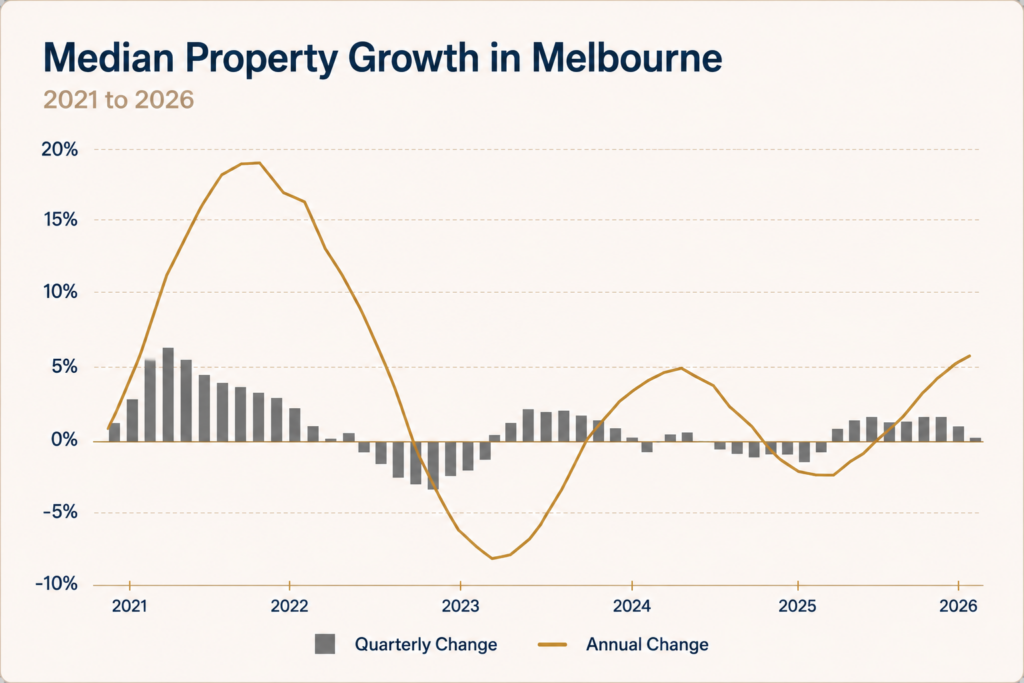
Property markets, however, do not all move together. During the same period that consumer confidence remained subdued, Perth experienced exceptional growth, Brisbane and Adelaide continued to outperform many expectations, and Melbourne has begun showing many of the characteristics associated with an emerging recovery.
This is why we don’t make investment decisions based on sentiment alone. Confidence can influence when people decide to act, but it doesn’t explain which markets are likely to outperform over the next five or ten years.
Headlines Focus on the Macro. We Look at the Micro.

Most of the information Australians consume every day is based on macroeconomic data. Interest rates, inflation, unemployment and consumer confidence all help explain the broader economic environment, but they don’t tell us where the strongest investment opportunities are developing.
At Prospera, we use that information as a starting point rather than a conclusion.
Our analysis begins by understanding the national outlook before drilling into the data that actually drives individual property markets. We assess how each state is performing, which cities are experiencing sustainable growth, and the suburbs benefiting from population growth, infrastructure investment, employment opportunities and constrained housing supply.
Only then do we begin evaluating individual investment opportunities.
This layered approach allows us to filter out broad market noise and focus on the locations where the long-term fundamentals remain strongest.
The Fundamentals Continue to Support Property
When we step beyond the headlines, the data continues to point towards one of the biggest structural challenges facing the Australian property market.
Australia’s population grew by more than 500,000 people over the past year, driven largely by strong overseas migration. At the same time, the construction industry continues to face significant challenges delivering enough new housing to meet that demand.
This growing imbalance between population growth and housing supply has been consistently identified by both Cotality and Domain as one of the key factors supporting long-term property values and rental conditions across many parts of Australia. Rather than being driven by short-term sentiment, property markets continue to be influenced by a structural shortage of housing, particularly in locations experiencing strong employment growth and population inflows.
For investors, this matters because supply and demand remain the foundation of long-term property performance.
While sentiment may fluctuate from month to month, these structural drivers typically play out over many years.
Melbourne Shows Why Looking Beyond Sentiment Matters
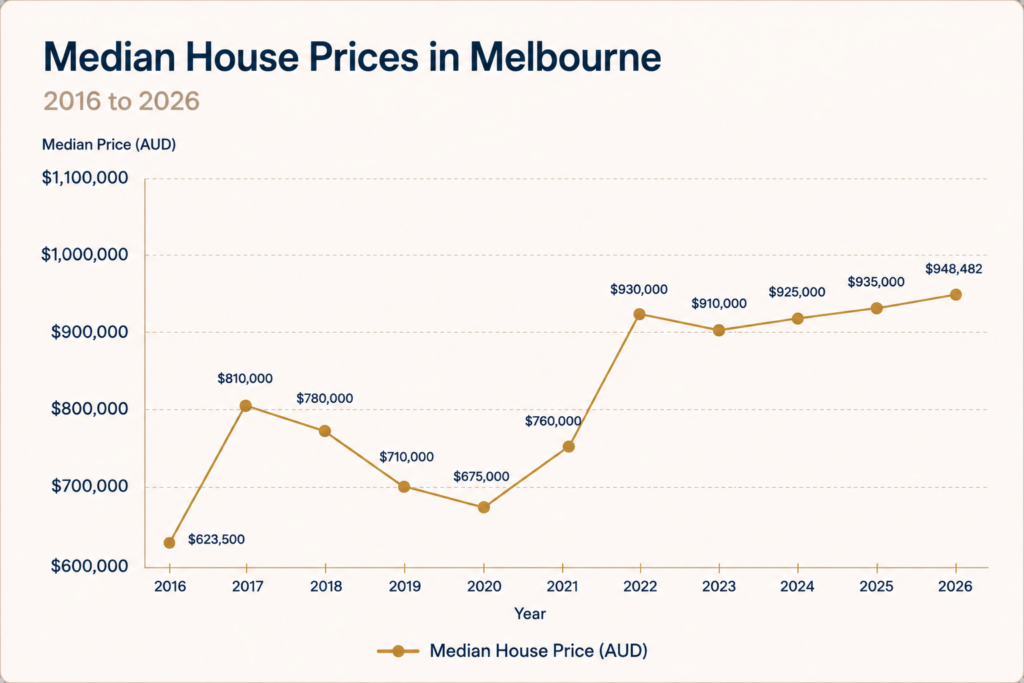
Melbourne is a good example of why understanding market fundamentals is more valuable than following sentiment.
Over recent years, many investors have focused on softer price growth, higher taxes and changing economic conditions. While these factors influenced confidence, they didn’t change the city’s long-term fundamentals.
Melbourne continues to attract significant overseas migration, remains one of Australia’s largest employment centres and is benefiting from substantial infrastructure investment. At the same time, the supply of new housing is struggling to keep pace with projected population growth.
Cotality’s recent market commentary has also highlighted Melbourne as a market showing improving conditions as affordability, migration and supply dynamics begin to rebalance. Domain has similarly pointed to improving buyer activity as confidence slowly returns to the Victorian market.
These are the types of indicators we focus on.
Not because they create tomorrow’s headlines, but because they help explain where the next stage of the property cycle is likely to emerge.

Strategy Starts Before Property Selection
This is why property selection is never our starting point.
Every client begins with a strategy. We take the time to understand what they are trying to achieve, whether that’s paying down non-deductible home loan debt, building a portfolio that creates long-term financial freedom or establishing wealth that can support future generations.
Once those goals are clear, we apply our investment framework. We assess the broader economy, analyse state and city-level trends, evaluate suburb fundamentals and then identify opportunities that align with both the market data and the client’s objectives.
Every property should serve a purpose within the broader strategy.
Because long-term wealth is rarely created through one good investment. It is built through a series of well-informed decisions that continue to support one another over time.
Looking Beyond Today's Headlines

There will always be reasons to wait. Interest rates will rise and fall. Elections will come and go. Economic conditions will change.
The investors who perform best over the long term are not those who ignore uncertainty. They are the ones who understand which information matters, separate sentiment from fundamentals, and make decisions based on evidence rather than emotion.
At Prospera, that’s exactly what we help our clients do.
We don’t invest based on confidence.
We invest based on the data that tells us where opportunity is likely to exist, and how that opportunity aligns with our clients’ long-term goals.
Ready to Invest Beyond the Headlines?
Property investing isn’t about predicting tomorrow’s news. It’s about understanding the long-term trends that create lasting wealth.
If you’d like to understand how today’s market fundamentals could support your investment goals, we’d love to help.
Book a discovery call and discover how a strategy-led approach can help you build long-term wealth through property.