The 2026 Federal Budget has changed the conversation around property investing.
With proposed changes to negative gearing and capital gains tax now targeting established investment properties, many investors are reassessing how and where they invest. At the centre of these changes is a clear shift in policy direction. The government wants to encourage investment into new housing supply, not existing stock. And for strategic investors, that matters.
The budget changes are shifting investor focus
At Prospera, our focus on new build investment has never been about trends or marketing appeal.
It has always been about strategy.
New build opportunities often provide advantages that support long-term portfolio performance, including:
- stronger depreciation benefits
- lower maintenance and holding costs
- improved tenant appeal
- access to growth corridors and expanding infrastructure
- staged land releases aligned to supply cycles
These factors become even more important in an environment where holding costs, tax efficiency, and long-term structure matter more than ever.
Because strong investing is not just about buying property.
It is about buying assets that work efficiently within a broader strategy.
supply shortages continue to support new housing
Australia is still facing a significant housing supply shortage, with new construction struggling to keep pace with population growth and demand.
That imbalance is one of the key reasons governments are directing policy support toward new housing development.
For investors, this creates a strong underlying foundation through ongoing rental demand coupled with constrained supply, continued pressure on housing availability and stronger long-term support for well-positioned new housing assets.
In many growth corridors, these fundamentals are already translating into stronger rental performance and increasing demand from both tenants and owner-occupiers.
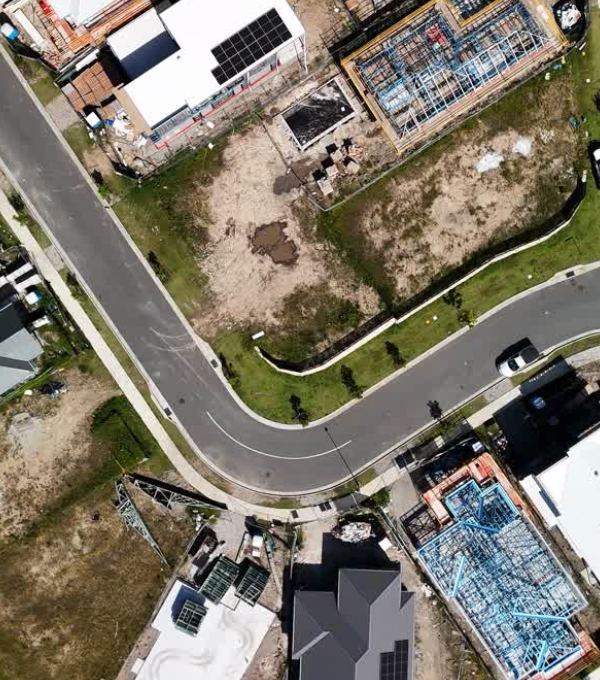
new build investment creates more flexibility
The proposed budget changes reinforce something experienced investors already understand – structure matters.
When tax settings tighten and market conditions shift, investors need assets that provide:
- stronger cash flow support
- greater efficiency
- lower ongoing costs
- flexibility for future portfolio growth
New builds often provide that flexibility more effectively than established properties, particularly when paired with strategic finance structuring, long-term debt planning, careful market selection and early positioning within growth corridors.
This is where strategy becomes critical.
Because two properties at the same price point can produce very different long-term outcomes depending on how they are structured and what they enable next.
why strategy matters more than ever
The strongest property outcomes are rarely created through isolated purchases. They are built through structure, sequencing, and long-term alignment.
That is why Prospera developed our Foundation Strategy.
Rather than focusing purely on acquiring property, the Foundation Strategy is designed to help clients build long-term personal wealth through a stable and strategic base. It combines asset selection, tax efficiency, debt structuring, and long-term portfolio planning into a coordinated approach aligned to individual goals.
For some clients, that means using investment performance, tax efficiencies, and equity growth to accelerate the reduction of non-deductible home loan debt and build personal wealth more efficiently.
For others, it means establishing a strong and stable portfolio foundation that can support future acquisitions over time.
And for some, the strategy extends beyond the individual, creating a multigenerational portfolio designed to support long-term family wealth and future flexibility.
Because the goal is not simply to buy property, it is to create a structure where each decision supports the next.
the foundation strategy in practice
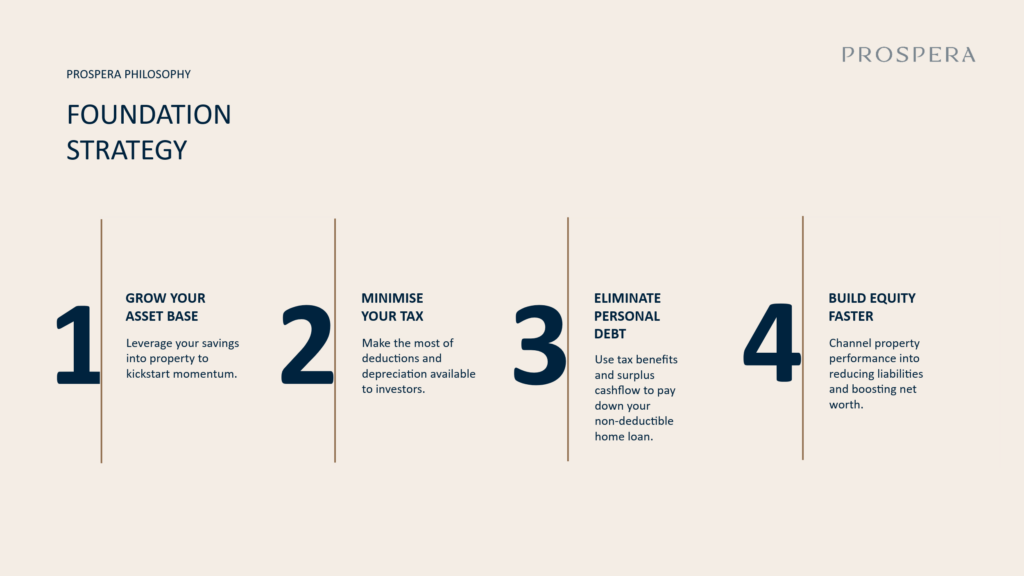
Our Foundation Strategy is built around four core stages:
- Growing your asset base through strategic acquisition
- Minimising tax through depreciation and investment structuring
- Using investment performance and cash flow to reduce personal debt
- Building long-term equity and financial flexibility
This creates momentum over time, where capital growth, debt reduction, rental income, and tax efficiencies work together within a coordinated strategy.
The result is not just portfolio growth.
It is increasing control, flexibility, and long-term wealth creation.
acquisition still matters, but so does access
A strategy is only effective if the right opportunities exist to support it.
At Prospera, we focus on acquiring assets positioned within markets where long-term supply is unlikely to keep pace with future demand over the next two, five, and even ten years.
This is particularly relevant in growth corridors benefiting from:
- population growth
- infrastructure investment
- constrained land supply
- ongoing housing shortages
Through our network, we have access to investment opportunities available now that align to this strategy and long-term market positioning.
Because in a supply-constrained environment, access becomes increasingly valuable, but only when paired with the right strategy behind it. As the market becomes more selective, the difference between simply owning property and building long-term wealth becomes even more defined.
the opportunity is not just tax benefits
While the 2026 budget changes make new build investment more attractive from a taxation perspective, the opportunity is broader than that.
The strongest outcomes are still driven by selecting the right market, entering at the right stage of the cycle, understanding supply and demand fundamentals and aligning every purchase to a long-term plan.
Tax benefits support the strategy. They do not replace it.
At Prospera, we evaluate every opportunity through that lens, because successful property investing is not about reacting to policy changes. It is about understanding how those changes affect long-term positioning.
what this means for investors in 2026 and beyond
The market is becoming more strategic.
Policy settings are changing. Supply remains constrained. Demand continues to grow. And investors who understand where the market is heading are adjusting accordingly.
This is one of the reasons new build investment is becoming increasingly important within long-term portfolio planning.
Not because it is new, but because the fundamentals, incentives, and long-term positioning are becoming harder to ignore.
Ready to Understand What These Changes Mean for You?
Property investing in 2026 requires more than reacting to headlines. It requires structure, clarity, and a strategy built around long-term outcomes.
If you want to understand how current budget changes could affect your investment position you can book a discovery call to discuss a strategy aligned to your goals.
The information provided by Prospera Property Group in this document is for general information purposes only and is intended as a high-level educational guide. It is not intended to influence a decision about a particular financial product or class of products.
It does not constitute financial product advice, credit advice, legal advice, or tax advice, and does not take into account your personal objectives, financial situation, or needs.
You should consider whether the information is appropriate for your circumstances and seek advice from appropriately licensed professionals, such as a financial adviser, mortgage broker, or accountant, before making any financial or property-related decisions.
While care has been taken to ensure the accuracy of the information, it may not reflect current market conditions or be suitable for all individuals. No representation or warranty is made as to its completeness or accuracy.
All investment strategies carry risk. Outcomes will vary depending on individual circumstances, market conditions, and other external factors.